Painting Kitchen Cabinets Instead of Replacing Them
When the boxes are solid, a careful repaint can change a kitchen completely, and two of our customers have said so in their own words.
October 13, 2026 · 4 min read
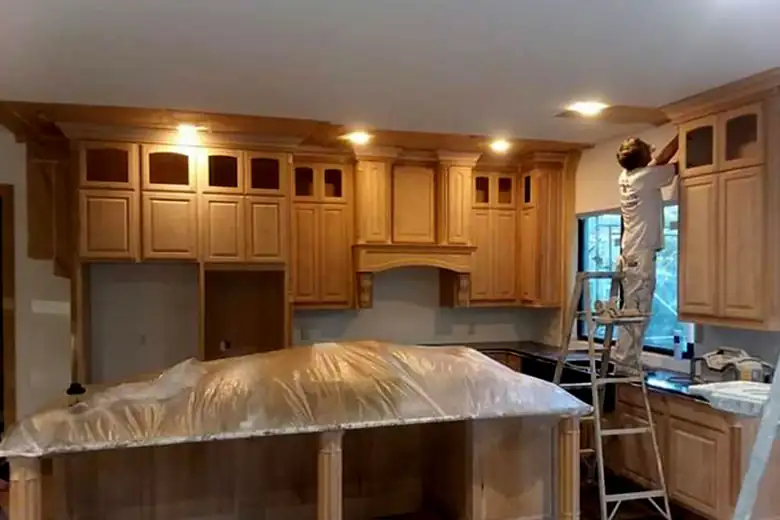
New cabinets are a big project. They mean demolition, ordering, waiting, and a countertop that may need to be pulled and reset. Painting the cabinets you already have is a smaller project, and in a lot of kitchens it gets you most of the way to the look you wanted. The catch is that it only works when the job is done in the right order.
When a repaint makes sense
Paint can change the color, the mood and the overall feel of a kitchen. It can't change the layout, and it can't fix cabinets that have given up. A repaint makes sense when the boxes are solid, the doors close properly and you're happy with where everything sits. Oak cabinets from a different decade are the classic case, and so are yellow or dated finishes that only need a new color.
It makes less sense when the boxes are swollen from water, when the layout is what you dislike, or when the cabinets are coming apart. Paint won't hold on wood that's still moving. A good painter will tell you that during the estimate, before anything gets spent.
What a cabinet repaint involves
Cabinet painting is mostly preparation, and the paint itself is the short part at the end. A thorough job follows a sequence:
- Empty the cabinets. Dishes, pantry goods and everything in the drawers come out so nothing is exposed to dust or overspray.
- Protect the kitchen. Floors, countertops, appliances and walls get covered. In our job photos you can see cabinets sprayed in place with the whole kitchen sheeted in plastic.
- Clean. Kitchen cabinets collect cooking grease, and paint doesn't stick to grease.
- Sand. A light scuff gives the primer something to grip, and chips or dents get filled and smoothed.
- Prime. A good primer locks in stains and bonds to the old finish.
- Paint. Brush, roller or sprayer, depending on the surface and the finish you're after.
- Cure. Let the finish harden before heavy use.
Brush, roller or spray
Our answer on tools is that each project is different, and we use whichever are best for the job. Typically that means brushes and rollers, and some specialty jobs call for a sprayer to get a high quality finish. Cabinets are one of those specialty jobs more often than most. A sprayer lays down a smooth, even coat with no brush marks, which is the look many people want on a painted door.
Spraying means masking, which is why the plastic goes up first. Overspray is a fine mist, and it travels. With the kitchen sealed off, it stays on the cabinets. Without that, it ends up on everything else.
Tamra's black kitchen
Tamra Vandiver hired the crew for her new cabinets and described the job in a Google review: "Reeves painting, Joshua & his team did an amazing job on my new cabinets! He worked with me on budget, timeline, and style. He suggested a certain paint to use based on my idea I was going for and they turned out beautiful." She had asked for what she called "sexy elegant black," and wrote, "it's def a show stopper."
Her review also says Josh was "very meticulous and thorough." The part worth pulling out is the paint suggestion. Dark cabinets show every flaw in the finish, so the product and the prep matter more than they do with a forgiving color. Matching the paint to the look you're after is part of the estimate conversation, and Tamra's review shows it happening.
Abigayle's yellow-to-white kitchen
Abigayle Haynes went the other direction. She wrote that Josh and his crew "knew exactly what to do with some odd interior painting and made it look completely new," and added, "Before and after pictures attached (yellow cabinets to beautiful white kitchen!!)." A clean white kitchen is a good example of how much of the result comes from the work underneath the paint.
She also noted the crew "worked quick, sent updates, and took care to cover all floors and surfaces," and that she planned to hire them again in the future. Cabinet work puts a crew in your kitchen for days, so updates and careful protection count for a lot.
Give it time to cure
Paint can feel dry to the touch long before it's fully hard. Our painting tips say to allow 30 days before washing a freshly painted wall, and we'd treat cabinets with the same patience, since doors and drawer fronts take far more hand contact than a wall does. Use a gentle touch at first, hold off on heavy cleaning, and the finish will last.
If you're deciding between new cabinets and a repaint, call Reeves Painting at (903) 360-3570. We'll look at the boxes, tell you honestly which way to go and put a printed estimate in your hands.
Reeves Painting, (903) 360-3570
Call (903) 360-3570More articles
Why We Wrap a Room in Plastic Before We Touch the Ceiling
The plastic tent looks dramatic, and it is the reason your house is still livable at the end of every work day.
Test a Paint Color on a Foam Board Before You Buy the Gallon
A quart of paint and a piece of foam board will tell you more about a color than any swatch card in the store.