Why We Wrap a Room in Plastic Before We Touch the Ceiling
The plastic tent looks dramatic, and it is the reason your house is still livable at the end of every work day.
October 13, 2026 · 4 min read
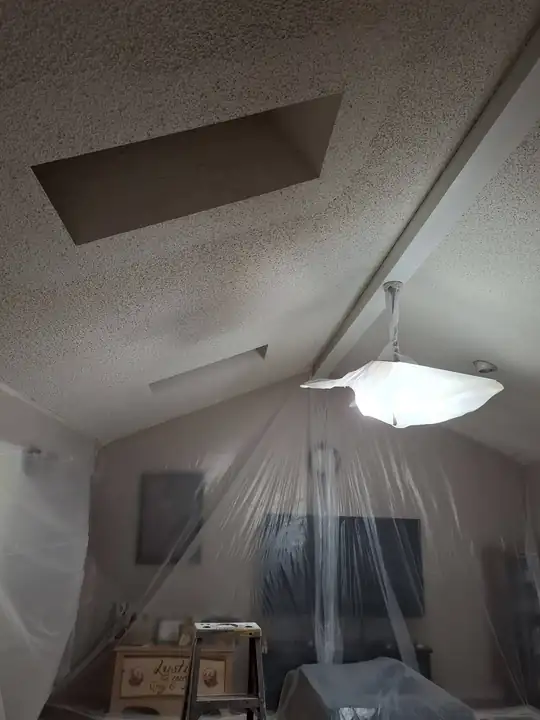
Walk into a house on the morning Josh Reeves and his crew start an interior job and you might think someone is packing the living room for a move. Clear plastic runs from the ceiling to the floor, the light fixtures are tucked inside bags, and the sofa has disappeared under sheeting. It looks dramatic, and it's deliberate. Sealing the room is the first real step of the job, and it's the reason your house is still livable every evening while the work goes on.
What the plastic is actually doing
Ceiling work is the messy part of painting. Skimming a textured ceiling smooth, patching a crack, sanding the patch and rolling paint overhead all throw something into the air or onto the floor. Sanding dust drifts a long way, and roller spatter comes straight down. A sealed room keeps all of it in one place, so the hallway, the next bedroom and the kitchen stay the way you left them.
The tent goes up before any ceiling or wall work starts. Plastic covers the walls and openings, tape seals the edges, and the room becomes a box with a ceiling to work on. The jobs in our photo albums show it plainly: a vaulted living room wrapped from top to bottom, a hallway sheeted from floor to ceiling, a bedroom with the ceiling fan bagged and glowing through the plastic.
Fixtures, fans and switch plates
Light fixtures and ceiling fans get bagged in plastic so paint and dust can't settle in the glass or on the blades. It's a small step that most homeowners never think about until they find drips inside a glass globe. Switch plates and outlet covers come off before painting and go back on afterward. One tip from our painting tips page saves a lot of hunting: tape the screws to the covers as you remove them, and nothing rolls under the refrigerator.
Floors get drop cloths, not bedsheets
The plastic goes on the walls and openings. Floors get something different. A plastic sheet on a floor turns slippery, and a slick floor under a ladder is a hazard, so floors get proper drop cloths. Here's a rule we'll repeat to anyone who asks: painters should never use bedsheets or other light fabrics to cover the floor, since paint can soak right through them. High quality drop cloths are absolutely necessary on any interior painting job.
Abigayle Haynes noticed the difference in her Google review. After describing the yellow-to-white kitchen the crew finished, she wrote that they "worked quick, sent updates, and took care to cover all floors and surfaces." That last line is exactly what we want a customer to be able to say.
What you do before the crew arrives
Your part is short, and doing it well helps the crew start on time. After the contract is signed, our prep service handles protecting and removing furniture and fragile items such as pictures, glass items and electronic devices, and the crew does the heavy lifting. A few things still go better when you handle them first:
- Clear countertops, shelves and tabletops of medications, jewelry, papers and anything with sentimental value.
- Take down mirrors and framed art you'd hate to see knocked loose, or point them out so the crew handles them first.
- Keep pets and small children out of the work area. Ladders and plastic sheeting don't mix with either.
- Show the crew every crack, nail pop or stain that bothers you, so it gets repaired before paint instead of after.
- Plan where you'll spend the day. A sealed room means a closed door and some noise on the other side of it.
Why the sealed room helps the finish
A tented room lets the crew do real prep instead of rushed prep. Our prep work includes repairs for holes and cracks, and our process calls for thorough sanding of all surfaces to create a good base. Our painting tips page lays out the routine for small repairs: fill holes and cracks with spackle using a wide, flat blade, let it dry, sand until smooth, and prime each spot. Sanding is dusty work, and a sealed room is what lets it happen without the dust following you through the house.
Priming matters just as much. Some painters might spot prime ceilings, but professionals never spot prime walls, since the patches show through the finish. Spot priming overhead is forgiving. On a wall it isn't, and the difference only shows up after the paint dries and the afternoon sun comes through the window.
Taking it all down
At the end of each work day your home is left clean and safe. When the job is finished you get a full clean up and a full walkthrough to address any concerns. The plastic comes down, the fixtures come out of their bags, and the room that looked like a shipping crate yesterday looks like a room again, only with fresh paint overhead and clean walls.
One more tip from our painting tips page: wait at least 24 hours before bringing furniture back into a freshly painted room, and allow 30 days before washing the walls. Fresh paint looks dry long before it's hard, and a sofa dragged in too early can leave a mark that's harder to fix than the original problem.
If you've got a room in Lindale, Tyler or Longview that needs a ceiling repaired and everything repainted, call Reeves Painting at (903) 360-3570 for a free written estimate. A painting professional will walk the room with you, tell you how it will be protected and put the plan on paper.
Reeves Painting, (903) 360-3570
Call (903) 360-3570More articles
Test a Paint Color on a Foam Board Before You Buy the Gallon
A quart of paint and a piece of foam board will tell you more about a color than any swatch card in the store.
Painting Kitchen Cabinets Instead of Replacing Them
When the boxes are solid, a careful repaint can change a kitchen completely, and two of our customers have said so in their own words.